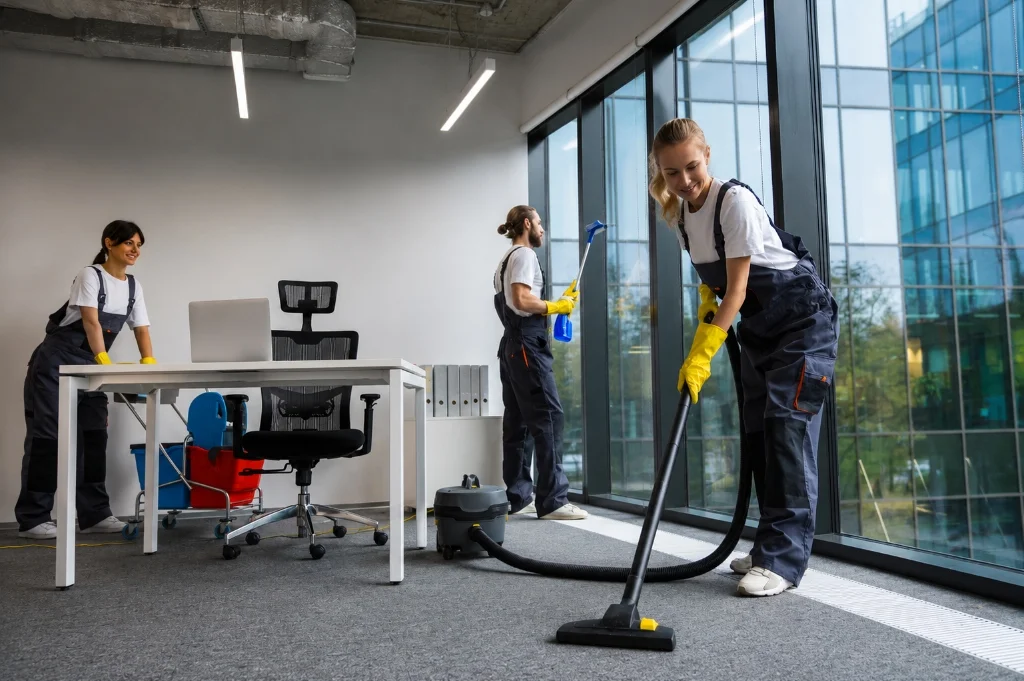

Signing a cleaning contract based purely on the lowest quote is one of the most costly mistakes facility managers make. Weeks later, missed cleaning days, damaged floor finishes, unverified staff on-site, and failed compliance audits reveal the true price of choosing on cost alone. A proper vetting process protects your building, your tenants, and your reputation from problems that are difficult to reverse once the contract is live.
Professional commercial office cleaning providers welcome scrutiny. They arrive prepared with insurance certificates, compliance documentation, and clear operational processes. Underperforming providers dodge questions, offer vague answers, or promise to send paperwork later. The difference shows up on day one of the contract - and every day after.
This guide breaks down the 7 essential vetting standards Brisbane facility managers should apply before signing any commercial cleaning agreement. Whether you manage a corporate tower, healthcare facility, retail centre, or government building, these checks separate genuine long-term partners from providers who will create more problems than they solve.
1. Verify Security Clearance and Staff Vetting Procedures
Cleaning teams operate in your building when nobody else is around. They have access to reception areas, executive offices, meeting rooms with confidential documents, IT server rooms, and expensive equipment. If your provider's vetting standards are weak, your building's security is only as strong as its weakest cleaner.
Ask for documented evidence of:
- National criminal history background checks (recent, not expired)
- Right-to-work verification for all deployed staff
- Photo ID system with badges worn on-site
- Named supervisor accountability for every shift
- Uniform standards and identifiable branding
Reputable providers keep updated files on every cleaner and can produce them on request. If a provider hesitates or claims background checks are "the cleaner's responsibility," walk away - you cannot outsource accountability for who is inside your building.
2. Confirm Public Liability and Work-Cover Insurance
Accidents happen. A cleaner accidentally triggers a fire alarm during a strip-and-seal treatment. A wet floor causes a visitor to slip and injure themselves. The cleaning solution damages a leather boardroom chair. Without adequate insurance backing your provider, your business absorbs the loss.
Minimum insurance standards for commercial cleaning contracts should include:
- Public liability insurance of at least $20 million
- Full work-cover compliance (mandatory for all staff)
- Product liability insurance for chemical handling
- Professional indemnity coverage
- Current certificates of currency (not expired)
Ask for copies of the actual insurance certificates before signing. Verify the dates are current and the coverage matches what the provider verbally promises. Some providers quote high figures but hold policies with significant exclusions - read the fine print carefully.
3. Assess Their Quality Control and Audit Systems
A reliable cleaning provider does not wait for you to complain. They audit their own work through structured, documented systems and share the results with you transparently. Providers without proper quality control are effectively invisible after they leave the site - you have no way to know what was actually done.
Modern quality control systems for commercial cleaning include:
- On-site supervisor audits with photo evidence
- Digital checklists completed by cleaners on tablets or phones
- Random scheduled audits by area managers
- Client-accessible reporting dashboards
- Monthly performance reviews with your facility team
Ask specifically how issues are escalated when standards drop. Providers that offer only verbal reassurance without documentation are hiding weak systems. This is one of the clearest quality indicators - and the reason professional office cleaning genuinely improves workplace productivity rather than becoming a source of complaints.
4. Check WHS and Compliance Documentation
Work Health and Safety compliance is not optional. Cleaning involves chemicals, wet surfaces, height access, and shared workspaces - every one of which carries risk. Providers who cut corners on WHS documentation expose your building to compliance issues that can trigger investigations, penalties, and reputational damage.
Documentation your provider should be able to produce on request:
- Safe Work Method Statements (SWMS) for each cleaning task
- Safety Data Sheets (SDS) for every chemical used
- Chemical registers matching what is deployed on-site
- Staff WHS induction records
- Incident and near-miss logs
Compliance-focused cleaning matters most in healthcare, education, food handling, and government facilities where audit trails are mandatory. Waste management and hygiene compliance protocols follow the same documentation principles - properly vetted providers maintain both. Even for standard commercial offices, well-documented WHS practices protect against workers' compensation disputes and reduce liability exposure.
5. Evaluate Their Cleaning Method and Product Standards
Not all cleaning is equal. A provider using cheap, harsh chemicals on premium vinyl floors will strip finishes prematurely and shorten asset life. Poor equipment leaves streaks on glass and damages carpet fibres. Ask about the specific methods and products your provider uses - and match them against your building's needs.
Key questions to ask:
- Which cleaning products are used, and are they TGA-approved where required?
- Are eco-friendly, low-VOC options available for sensitive environments?
- Is the provider trained in specialist treatments like vinyl floor strip and seal?
- What equipment is used (commercial-grade or consumer-level)?
- How is equipment maintained and sanitised between sites?
Specialist services matter for buildings with vinyl floors, carpeted areas, glass facades, or hard-to-reach surfaces. Providers who bundle daily janitorial services with periodic specialist treatments deliver better long-term asset protection than providers offering only basic surface cleaning.
6. Review References and Site Visit Existing Clients
A commercial cleaning provider's marketing claims mean little without validation from current clients. Reference checks and site visits reveal how the provider actually performs on real sites - not how they present themselves in sales meetings.
When checking references, ask:
- How long has the provider serviced your site?
- How responsive are they when issues are raised?
- What is the staff turnover rate on-site?
- Do audits and reports arrive on time and accurately?
- Would you renew the contract if it were up today?
Where possible, arrange to visit a similar-sized facility currently under contract. Observe presentation standards, staff uniforms, on-site supervision, and general professionalism. A provider unwilling to arrange a reference visit is signalling weak client relationships. Some cleaning issues also connect to broader facility hazards - slip risks in commercial buildings are frequently caused or worsened by poor cleaning practices, so ask specifically about how the provider manages wet-work protocols.
7. Test Communication Response Times Before Signing
The best time to evaluate a cleaning provider's communication is during the sales process - because their response speed then represents their best possible service level. If they take three days to answer a pre-contract question, they will take longer once the contract is signed and revenue is locked in.
Before signing, test:
- Email response time to non-urgent queries (within 4-8 business hours is standard)
- Phone response speed during business hours
- After-hours emergency contact procedures
- Named account manager assigned to your facility
- Clarity of scope discussions and quote breakdowns
Slow, vague, or defensive communication before the contract is a reliable predictor of the same behaviour after. Providers who invest in dedicated account management and clear communication systems deliver more consistent service across the length of the contract.
Common Vetting Mistakes Facility Managers Should Avoid
Even experienced facility managers make vetting errors that create long-term problems. Being aware of these helps you make better contract decisions:
- Accepting verbal promises without documentation. If a provider claims to have insurance, background checks, or WHS systems, ask for proof in writing. Verbal claims mean nothing when problems arise later.
- Skipping the site walk-through. Never sign a cleaning contract without walking the provider through your building. Their questions, observations, and scope suggestions during that walk-through reveal how experienced they actually are.
- Ignoring scope creep clauses. Contracts should clearly define what is included and what is billed as additional. Vague scope wording leads to disputes and unexpected invoices.
- Choosing the cheapest quote automatically. The lowest quote frequently reflects understaffing, undertraining, poor equipment, or hidden charges that emerge later. Total cost of ownership matters more than initial rate.
- Not checking for local Brisbane operational presence. Providers without genuine local supervision struggle to respond quickly when issues arise. Confirm your provider has real Brisbane-based management, not just a subcontracted local crew.
Ready to Work with a Properly Vetted Commercial Cleaner?
Vetting a commercial cleaner properly shouldn't feel like a legal audit. YOT Services delivers transparent, documented commercial cleaning across Brisbane and wider Queensland - including insurance-backed contracts, on-site supervisor audits, digital reporting, and specialist services like vinyl floor strip and seal and facade cleaning. Every contract is structured for full accountability from day one.