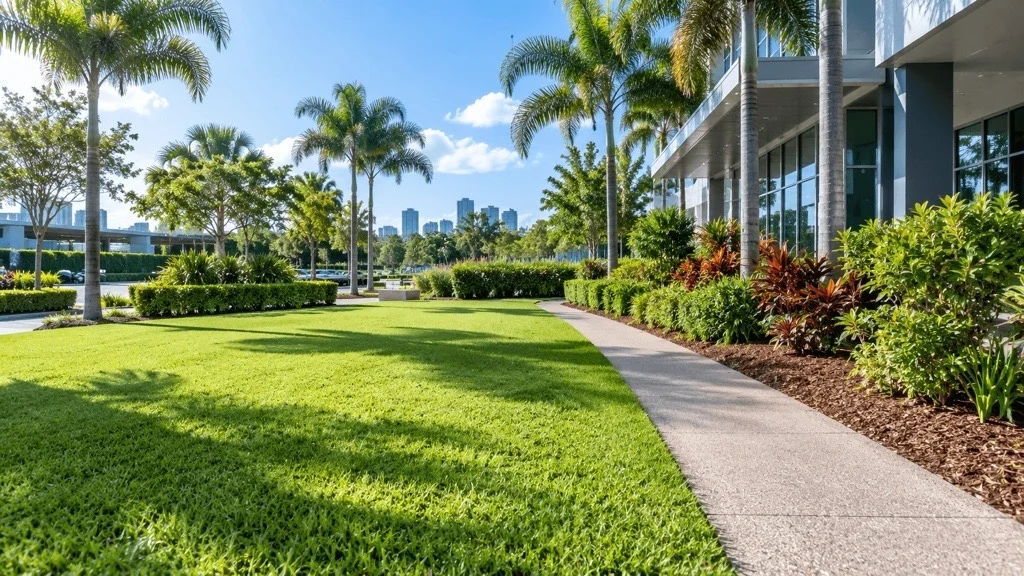
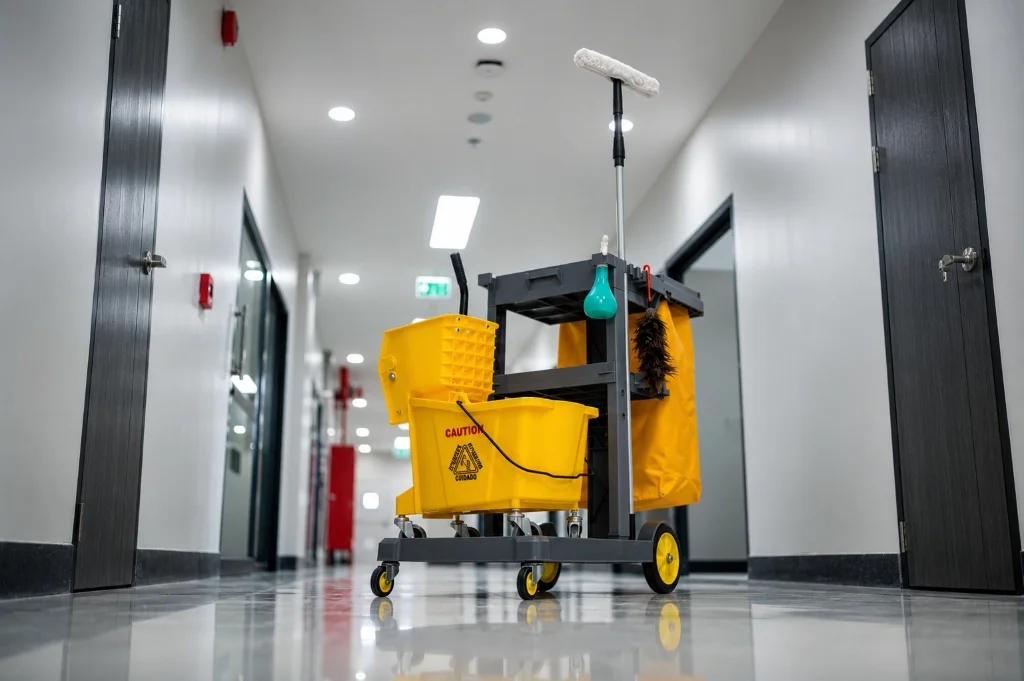
Slip and trip incidents on commercial property exteriors are one of the most preventable - yet most costly - sources of public liability claims for Brisbane facility managers. A single fall on a moss-covered walkway, a rain-slicked loading dock, or a leaf-strewn pathway can trigger insurance investigations, workers' compensation cases, and reputational damage that lasts far longer than the incident itself.
While indoor safety protocols like wet-floor signs and non-slip mats are standard practice, outdoor environments receive far less structured attention. Exterior walkways, car parks, delivery zones, and garden-adjacent paths are exposed to weather, vegetation debris, drainage issues, and oil contamination - all of which create constant, evolving safety risks that require proactive grounds maintenance services rather than reactive cleanup.
This guide breaks down 7 proven ways Brisbane facility managers can reduce exterior slip hazards through structured grounds maintenance, drainage management, and vegetation control. Whether you manage a shopping centre car park, corporate campus, or government precinct, these methods significantly cut the risk of preventable falls.
1. Manage Leaf Litter and Vegetation Debris Regularly
Falling leaves, twigs, seed pods, and bark from mature trees accumulate quickly on walkways, especially during storm seasons and autumn months. When rain hits this debris, it decomposes into a slick organic film that dramatically reduces surface friction - turning a safe pathway into a genuine hazard within hours.
Effective debris management includes:
- Scheduled leaf blowing and sweeping (frequency scaled to tree coverage)
- Vacuum sweepers for large car parks and loading zones
- Storm-response clean-ups after heavy weather events
- Seasonal escalation during autumn shedding periods
- Post-pruning debris removal from paths and drains
Facilities with heavy tree coverage benefit from weekly rather than fortnightly ground visits during high-shed months. The cost of increased service frequency is negligible compared to a single liability claim. Well-run cleaning teams also connect this to interior hygiene - clean workplaces and their productivity impact begin at the front door, and debris tracked inside undermines both safety and presentation.
2. Eliminate Moss, Mould, and Algae Growth on Hard Surfaces
Shaded pathways, courtyards, north-facing walls, and areas near garden beds stay damp longer than sun-exposed zones. In Brisbane's humid climate, this creates ideal conditions for moss, algae, and mould growth on concrete, brick paving, and stone surfaces. The resulting organic layer behaves like ice under wet footwear - offering almost no friction to pedestrian shoes.
Effective removal methods:
- Hot-water pressure cleaning (60-90°C) to kill spores at root level
- Anti-microbial treatments applied post-cleaning for extended protection
- Non-slip coatings applied to smooth or polished surfaces
- Improved sunlight exposure through vegetation pruning
- Regular re-treatment cycles (typically every 6-12 months)
Pressure washing must be calibrated to the substrate - excessive pressure damages porous concrete and brick paving, while insufficient pressure leaves spores embedded in surface pores. Certified operators know how to strip contamination without eroding the underlying material.
3. Review Drainage and Water Runoff Paths
Poorly graded garden beds, blocked stormwater grates, and undersized drainage points cause water to pool across walkways during heavy rain. Standing water on smooth surfaces is a slip risk in itself - and when combined with organic debris or oil residue, it becomes significantly more dangerous.
Grounds maintenance teams should inspect and manage:
- Surface grading around pathways (water should flow away from pedestrians)
- Stormwater grate cleanliness (blockage causes overflow onto paths)
- French drain installation in chronically wet zones
- Downpipe outflow direction (should discharge away from walkways)
- Vegetation encroachment blocking drainage lines
Brisbane's tropical storm patterns make drainage management especially critical. A single blocked grate during a summer downpour can flood an entire loading dock or car park entrance within minutes.
4. Control Weeds and Invasive Vegetation
Weeds growing through paving cracks, along walkway edges, and in car park expansion joints don't just look untidy - they actively contribute to slip hazards. Root systems widen cracks, creating uneven surfaces. Overgrown edge vegetation obscures step transitions. And decomposing weed debris after mowing creates the same slick film as leaf litter.
Professional weed control services address exterior hazards through:
- Chemical weed treatment along paving joints and edges
- Manual removal in sensitive garden or planting zones
- Post-emergent spray programs on hard surfaces
- Kerb-line and gutter clearing to prevent debris build-up
- Non-selective treatment for gravel areas and pathways
Weed control should always be paired with debris removal - killed weeds left in place decompose and create the same slip hazard as any other organic litter.
5. Maintain Non-Slip Surface Treatments
Original surface finishes on commercial exteriors wear down over time. Concrete pathways lose their broom-finish texture, polished tiles become slick from foot traffic, and metal grates lose their anti-slip pattern from wear. Restoring or renewing these treatments is a critical part of long-term slip prevention.
Options depend on surface type:
- Anti-slip coatings applied to smooth tile and polished concrete
- Etching treatments for concrete that has lost its texture
- Grit-integrated sealers for high-traffic zones
- Replacement of worn anti-slip strips on steps and ramps
- Slip-resistant paint on painted surfaces (loading docks, ramps)
Facility managers who vet their maintenance provider carefully get better outcomes on specialist treatments like these. Proper application requires certified operators and specific substrate preparation - done incorrectly, the treatment fails within months.
6. Address Oil, Grease, and Chemical Spills Promptly
Loading docks, delivery zones, tenant back-of-house areas, and staff car parks accumulate oil, hydraulic fluid, and chemical residue over time. Even a light film of hydrocarbon on a smooth surface creates a serious slip risk - and these contaminants are often invisible to the naked eye until they cause an incident.
Effective spill management includes:
- Rapid-response cleanup protocols for fresh spills
- Absorbent material stocked at loading zones and delivery bays
- Scheduled degreasing of high-risk zones (monthly or quarterly)
- Steam cleaning for embedded grease in concrete pores
- Bunding and drainage protection to contain accidental spills
Commercial garden and pathway teams often carry degreasing equipment as standard - combining regular commercial garden maintenance with routine surface cleaning delivers better outcomes than treating them as separate services.
7. Improve Exterior Lighting to Highlight Hazards
Poor lighting turns manageable exterior hazards into serious incidents. Low light conditions prevent pedestrians from seeing wet patches, cracked paving, moss growth, or elevation changes. In many liability cases, inadequate lighting is cited as a contributing factor to preventable falls.
Lighting considerations for slip prevention:
- Consistent illumination across the full walkway width
- Elimination of dark shadows created by garden features or walls
- Sensor-activated lighting for after-hours pedestrian zones
- LED replacements for aged fluorescent or halogen fittings
- Clear illumination of steps, ramps, and elevation changes
Grounds teams often coordinate with electrical maintenance to trim vegetation blocking existing lights or to flag areas where lighting upgrades would materially reduce risk. Enhancing exterior presentation naturally supports better commercial landscaping and curb appeal too - visitors notice well-lit, well-maintained exteriors immediately.
Common Slip Hazard Mistakes Facility Managers Should Avoid
Even facilities with active grounds programs can leave critical slip hazards unaddressed. Being aware of these common mistakes helps you close the gaps:
- Treating slip risk as an indoor issue only. Outdoor pathways, car parks, and loading zones carry the same - often higher - slip risk as indoor spaces. Structured exterior maintenance deserves the same attention as internal wet-work protocols.
- Skipping post-storm inspections. Heavy rain, wind, and hail create fresh hazards that require immediate response. Storm-response clean-ups are a legitimate scheduled item, not an emergency add-on.
- Ignoring seasonal escalation. Ground maintenance schedules that stay static year-round fail during autumn shedding, summer storm season, and rainy periods. Contracts should include scaling for seasonal risk.
- Overlooking transitional zones. Slip incidents frequently occur at transitions - from indoor to outdoor, from smooth to textured surface, from lit to shaded areas. These zones need extra attention.
- Not documenting maintenance activity. Without proper records of grounds care, defending against a liability claim becomes significantly harder. Digital audit trails matter as much for exterior maintenance as they do for interior cleaning.
Ready to Reduce Slip Hazards Across Your Commercial Exteriors?
Effective slip hazard mitigation shouldn't feel like a constant fire-fighting exercise. YOT Services delivers structured grounds maintenance across Brisbane and wider Queensland - including debris management, moss and algae removal, drainage inspections, weed control, and specialist non-slip surface treatments. Every contract includes seasonal scaling, storm-response protocols, and documented maintenance logs for full public liability protection.